
So you need a logo. You’ve probably already spotted the two very different paths in front of you: spend £20 and have something ready before your next cup of tea, or spend £100–£1,000+ and wait three weeks for a professional designer to deliver. On the surface, this looks like a cost question. It isn’t. It’s a risk question – and most comparisons you’ll find online won’t tell you that. Whether you’re weighing up an AI logo maker vs professional designer, this guide is going to give you the honest, no-fluff answer – including the part about copyright that could genuinely bite you later.
Quick Summary:
What AI Logo Makers Actually Do (And Don’t Do)
Let’s start with how most AI logo tools – think Looka, Canva, Wix Logo Maker, or Hatchful, actually work under the bonnet.
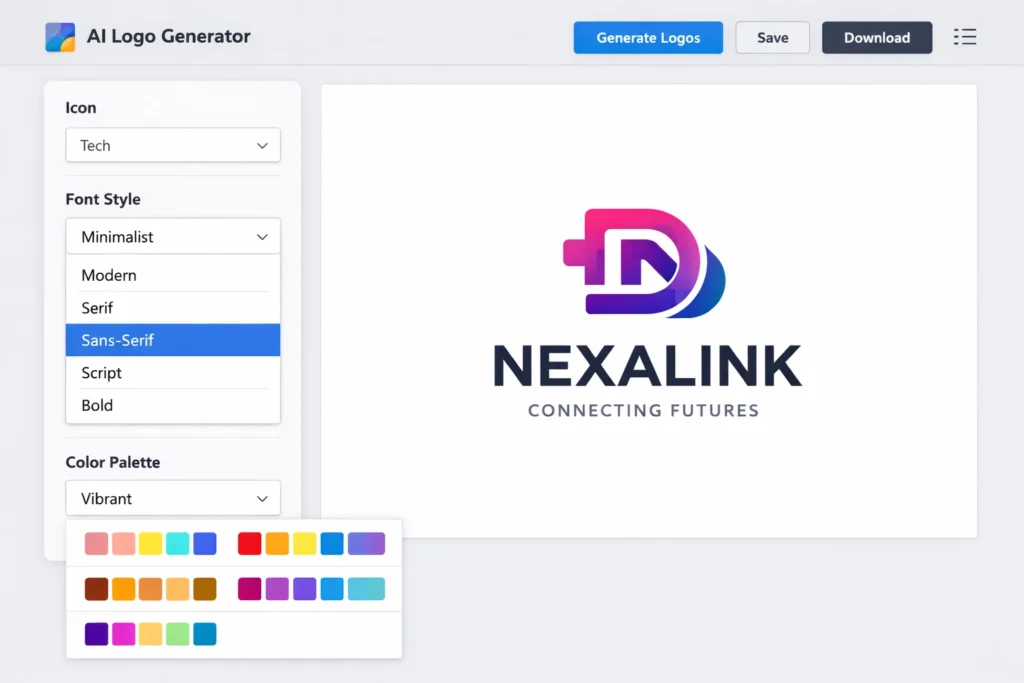
Most of these platforms aren’t doing anything magical. They’re running on what designers call parametric design systems – basically, a big library of pre-made icons, fonts, and colour rules that get swapped around based on your inputs. You type in your business name, pick your industry, choose a colour you like, and the tool assembles options from that shared library. The result looks clean. It looks professional-ish. But here’s the thing: that same icon library is being used by thousands of other businesses generating logos at the same time as you.
There are more advanced AI tools now, like Logo Diffusion, that actually generate novel visual marks from text prompts rather than mixing pre-built parts. That’s a step forward. But even there, the output is only as strategic as the prompt you typed.
What AI tools do brilliantly: speed and exploration. You can see dozens of directions in minutes, test colour combinations, and get a usable file quickly. For a business that’s still finding its feet, that has genuine value.
What they can’t do is think. They can’t read your market, study your competitors, understand the psychology of your specific customer, or make a creative argument on your behalf. They produce something that looks fine. A designer produces something that means something.
What a Professional Designer Actually Does
A professional brand identity designer isn’t just someone who draws logos for a living. When you hire a good one, you’re buying a strategic process – and that process is what makes the output worth the price tag.
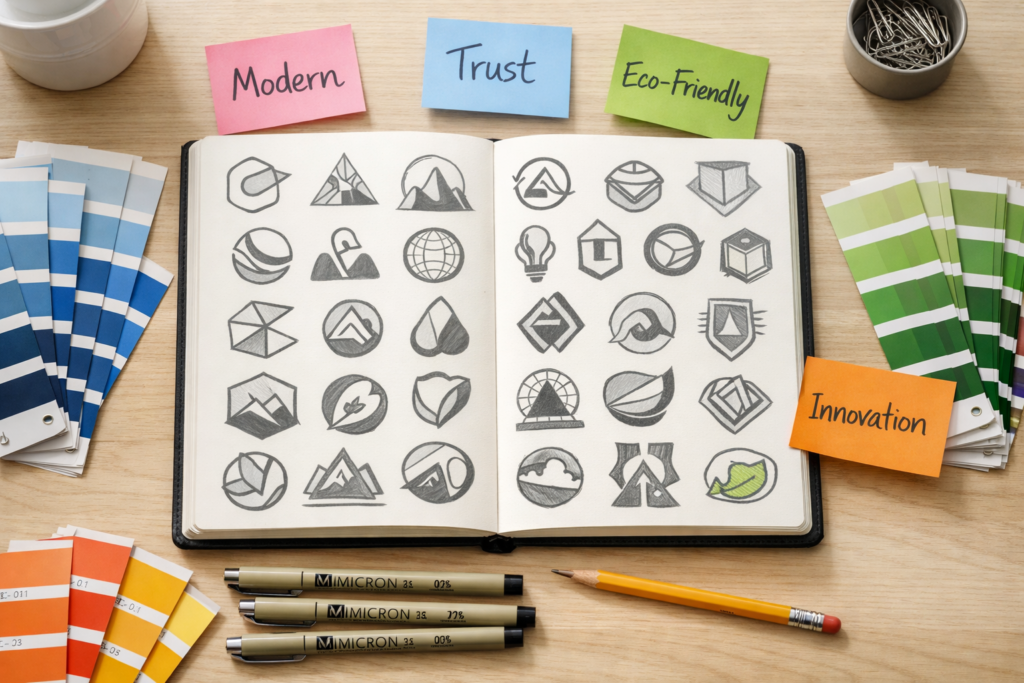
Here’s what a proper logo design project typically looks like:
- Discovery – understanding your business, your customers, your competitors and what makes you different
- Visual landscape analysis – studying the visual space your brand needs to occupy (and where the white space is)
- Concept development – multiple distinct directions, each with a strategic rationale
- Refinement – revisions, typography decisions, colour palette development
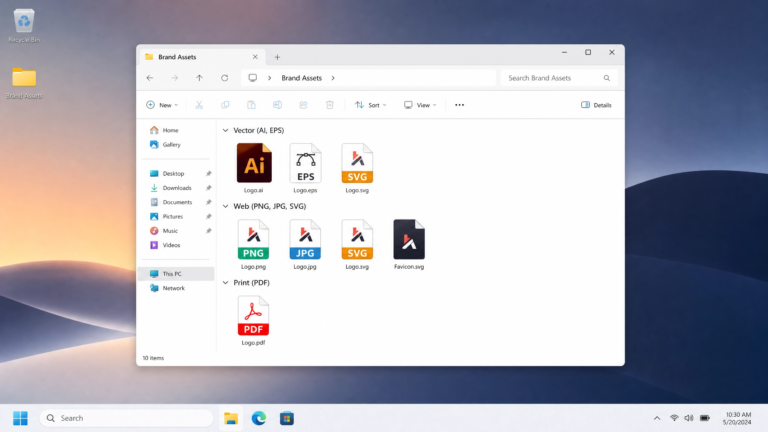
- Final delivery – all the file formats you’ll ever need, plus a brand style guide so anyone can use your brand correctly
What you’re really paying for is someone who can translate what your business is into something visual that connects emotionally with the right people. AI tools are limited to pattern recognition. A human designer brings intuition, taste, cultural understanding, and genuine creative problem-solving.
Think of it this way: an AI logo tool makes your logo look acceptable. A great designer makes your logo make people feel something.
The Cost Comparison (The Real Numbers)
Right. Let’s talk money, because this is usually the deciding factor – especially for small businesses.
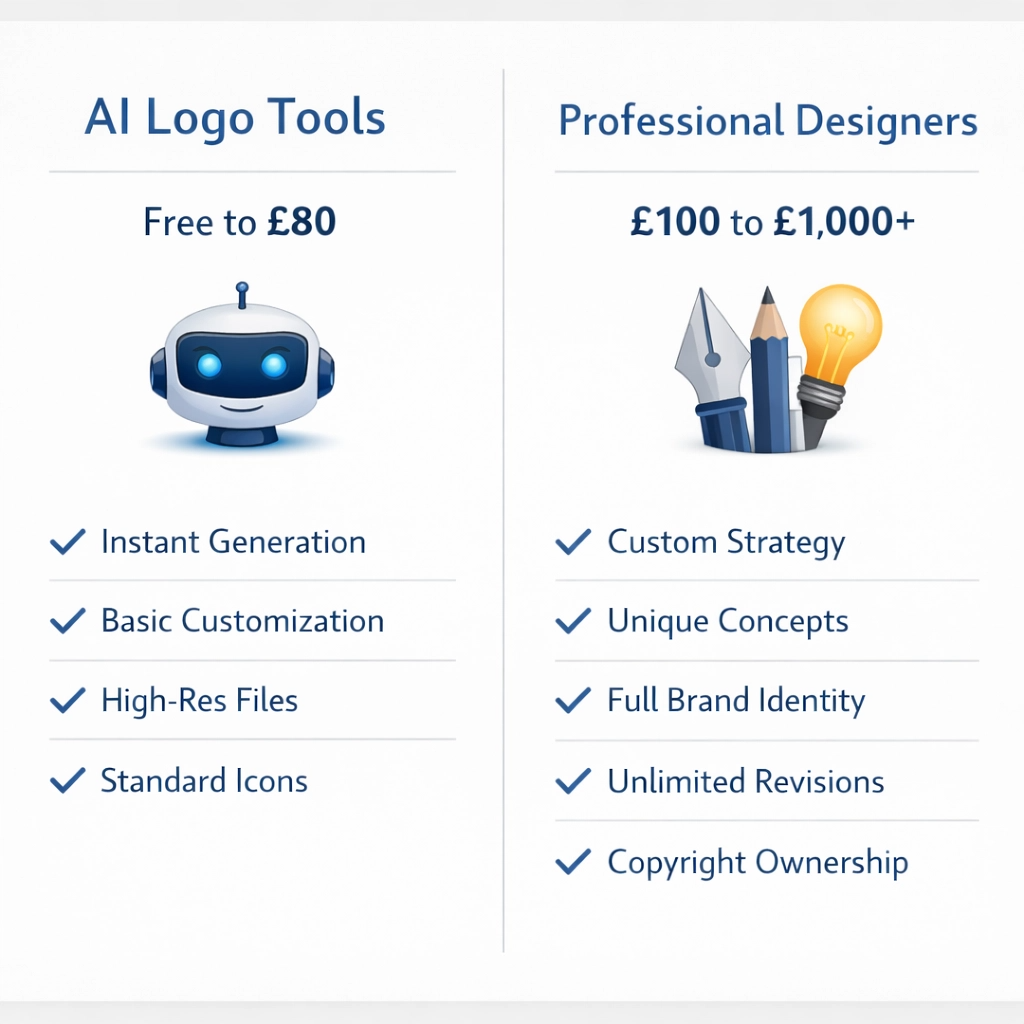
AI logo tools typically cost:
- Free (basic exports, watermarked files)
- £10–£30 for a one-off logo download
- £50–£80 for a full “brand kit” including logo variations, colour palette and font suggestions
Professional designers typically charge:
- £50–£150 for a freelance logo-only project
- £200–£500 for a full brand identity package from a freelancer
- £500–£10,000+ for a branding agency
Now here’s the part people miss. The AI tools look cheaper – until you factor in the hidden costs:
- Paid tier required for vector files (the format you actually need for print)
- No brand strategy means you might rebrand again in 12 months when you realise the logo doesn’t work
- Legal exposure – more on this in a moment, but this one can cost you thousands
The question isn’t “how much is the logo?” It’s “how much will getting this wrong cost me later?”
The Originality Problem – Will Your Logo Look Like Someone Else’s?
Here’s something the AI logo tools definitely don’t put in their marketing materials.
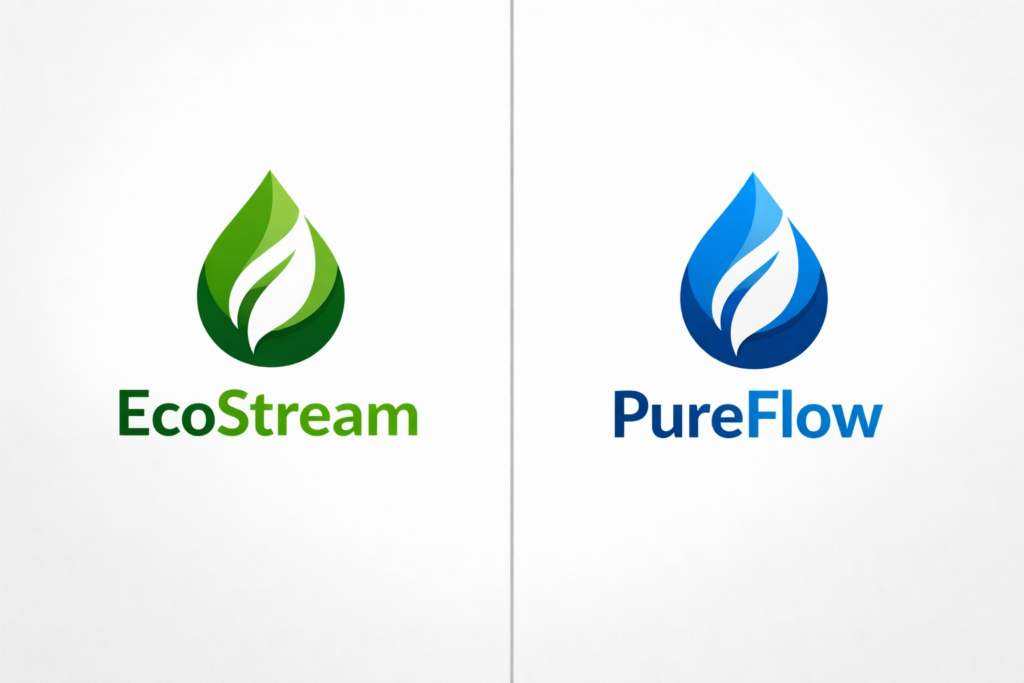
Because most AI logo generators pull from the same shared icon libraries, there is a very real chance that your logo, or something very close to it – already belongs to another business. You might not even know it.
This isn’t a small risk for growing businesses. In trust-sensitive industries – think healthcare, finance, legal services, or luxury goods, a template-derived logo isn’t just unoriginal, it actively signals that you haven’t invested in your brand. Customers notice that, even when they can’t explain why.
A professional designer, by contrast, is building something that exists specifically to make you look different from everyone else in your space. That’s not a nice-to-have, that’s the whole point of a brand identity.
The uncomfortable truth: if the same algorithm generated 10,000 logos this week, yours is one of them.
⚠️ The Copyright Bombshell Nobody’s Talking About
This is the section most articles skip. Don’t skip it.
Here’s the legal situation as it stands in 2026, in plain English:
You probably can’t copyright your AI-generated logo.
Only original works created by humans can be copyrighted. As far as copyright authorities are concerned, AI-generated logos lack human authorship, so they can’t be copyrighted.
What does that mean practically? It means someone could look at your logo, recreate it themselves, and use it – and you’d have very limited legal grounds to stop them. Your brand’s most visible asset would have no protection.
Now, there’s a distinction worth knowing here:
- Copyright protects the artistic work itself, it’s automatic in the UK from the moment a human creates something original
- Trademark protects a mark used in commerce to identify your business, this can apply to AI logos
The USPTO generally allows AI-generated logos to be trademarked – the focus is on whether it acts as a real brand identifier in commerce, not how it was created. The UK Intellectual Property Office takes a similar approach. So yes, you can potentially trademark an AI logo.
But here’s the catch: in many cases, AI-generated logos are considered stock images, meaning multiple businesses might be using the same design – which means you could invest in a logo only to find you can’t protect it as a trademark, another company is using the same image, or you don’t have the legal right to enforce ownership.
And in the UK specifically, copyright is an automatic right bestowed upon creation – but for a logo created by AI, that automatic protection may not apply, and paid users of AI platforms may own the logo but have limited control if the platform sublicenses it or if other users generate similar logos.
The bottom line: your AI logo might legally belong to everyone, including your competitors.
If you’re planning to invest in marketing, signage, packaging, or any serious brand presence, this is not a risk worth taking. Consult an IP solicitor before you commit. For UK trademark advice, the Intellectual Property Office is a good starting point.
💡 Not sure how strong your current brand is? Take our Brand Quiz to find out where your brand identity stands – and what to fix first.
When an AI Logo Is Genuinely the Right Choice
To be clear: AI logo tools aren’t bad. They’re just built for a specific situation.
Use an AI logo generator when:
- You’re pre-revenue or validating a concept – you need something that looks decent while you test the idea, not a full brand identity
- You need a temporary placeholder – something professional enough for a pitch deck or early social media presence
- You’re a sole trader in a low-competition local market – a plumber in a small town doesn’t need a strategic brand differentiation system
- Your brand will live almost entirely online at small sizes – profile pictures, Instagram posts, a simple website
Many businesses do exactly this: use an AI tool to get started quickly, test the market, and then hire a professional designer once they’ve got traction and revenue. That’s a completely sensible approach and it’s increasingly common.
When You Absolutely Need a Human Designer
Some situations simply can’t be solved by a template – and spending money on an AI tool here could actually cost you more in the long run.
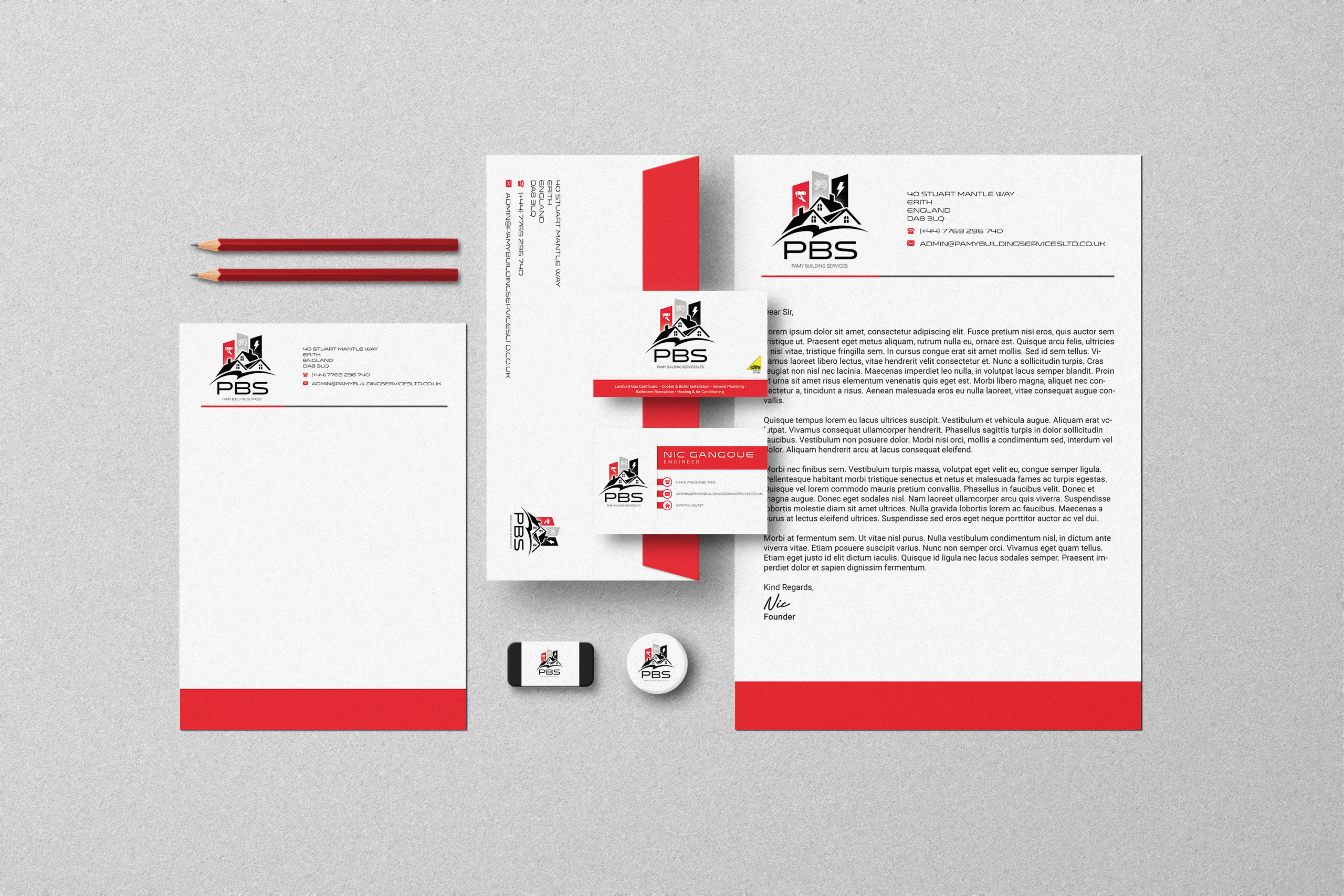
Hire a professional branding designer when:
- You’re in a competitive or trust-sensitive market – financial services, healthcare, legal, luxury, hospitality, or professional services
- You’re planning real marketing investment – if you’re spending money on ads, print, signage or packaging, your brand needs to hold up
- You want proper legal protection – a professionally created logo, with copyright clearly assigned to you in writing, is a legally protectable asset
- You’re building a brand system, not just a logo – a system that works across your website, social media, print and physical touchpoints needs strategic thinking behind it
- You’ve already tried a cheap logo and it’s not working – if people aren’t connecting with your brand, that’s a strategic problem, not a design one
The Smart Middle Ground: The Hybrid Approach
Here’s what’s actually happening inside many professional design studios right now, and what the AI tools don’t want you to know: professional designers are using AI too.
The difference is that they’re using it as a tool, not as the answer. They might use AI to rapidly generate icon concepts or explore colour combinations in the early stages, then apply their creative judgement, brand strategy, and expertise to build something genuinely distinctive from there.
AI is the assistant. The designer is the director.
What this means for you: you can absolutely use AI tools to explore ideas, generate rough directions, and understand what visual styles you’re drawn to – then bring that to a designer as a starting brief. That actually makes the designer’s job easier and your investment go further.
🎯 Already thinking about redesigning your website to match your new brand? Grab the Website Conversion Workbook to spot quick wins before you commit to a redesign.
So, AI Logo Maker vs Professional Designer – Which Wins?
Neither. It depends entirely on where you are in your business journey.
Here’s a simple three-question test:
- Are you generating revenue? If yes, your brand is a business asset worth protecting.
- Is your industry trust-sensitive? If yes, a generic-looking logo actively works against you.
- Are you planning to invest in marketing? If yes, your brand needs to hold up across every channel.
If you answered yes to two or more of those: hire a designer.
If you’re in the early stages, testing an idea, or working with a very tight budget – an AI tool can absolutely get you started. Just don’t mistake “started” for “done”.
❓ Frequently Asked Questions
Can I copyright an AI-generated logo in the UK? Not automatically. UK copyright law requires human authorship – a logo generated purely by AI without significant human creative input is unlikely to qualify for copyright protection. You may be able to trademark it, but the protection is more limited.
Does an AI logo look cheap? Not always – but they often look familiar. Because AI tools draw from shared libraries, you risk having a logo that looks similar to other businesses. In competitive markets, that lack of distinctiveness can undermine trust.
Is an AI logo good enough for a small business? For early-stage or sole trader businesses, yes – as a starting point. For businesses investing in growth, marketing, or operating in a trust-sensitive sector, a professionally designed brand identity is a worthwhile investment.
Can you trademark an AI-generated logo in the UK? Potentially yes. The UK IPO assesses trademarks based on distinctiveness and use in commerce, not on how the logo was made. However, you should always conduct a clearance search and seek legal advice before filing.